
SMARTPOL – Status 2024
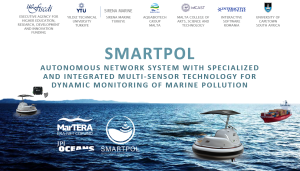 During 2024, the SMARTPOL consortium focused on the final integration,
validation and demonstration activities of the project.
The work performed throughout the previous stages was consolidated into
a complete operational architecture capable of supporting autonomous
marine pollution detection using intelligent sensors, IoT technologies
and AI-assisted data processing.
System Integration
Interactive Software continued the integration of the Command & Control
software platform with the communication and data acquisition subsystems.
Special attention was given to interoperability between autonomous
surface vehicles (USV), environmental sensors and the command center,
ensuring reliable collection, processing and visualization of operational
information.
Field Validation
The consortium validated the technical solutions developed during the
project by executing laboratory and operational demonstrations.
The validation activities confirmed the functionality of the proposed
architecture and demonstrated the feasibility of autonomous pollution
monitoring using standardized hardware and software components.
Communication Infrastructure
The communication architecture was further optimized, validating LoRa
technology for telemetry, command transmission and GPS positioning,
while broadband communications remained the preferred solution for
large data transfers such as imagery and video.
International Cooperation
Throughout 2024, the SMARTPOL consortium continued its close cooperation
between all international partners, coordinating the final technical
activities and preparing the project deliverables.
EUROSATORY 2024
Interactive Software presented its technologies during
EUROSATORY 2024,
held in Paris between 17–21 June 2024,
promoting the SMARTPOL project and its innovative Command & Control,
IoT and autonomous monitoring capabilities to an international audience
from the defence and security sector.
Project Completion
The SMARTPOL project reached its final implementation stage in December
2024, successfully achieving the planned research and development
objectives. The resulting technologies contribute to modern maritime
pollution monitoring by combining autonomous platforms, intelligent
sensors, secure communications and advanced Command & Control software
developed by the consortium.