SmartPol – SMART marine pollution autonomous USV-based detection system using intelligent sensors and AI-based image processing capabilities
SmartPol – SMART marine pollution autonomous USV-based detection system using intelligent sensors and AI-based image processing capabilities PNCDI III: National Plan for Research-Development and Innovation for the period 2015 – 2020 P3 – European and...

SmartPol – SMART marine pollution autonomous USV-based detection system using intelligent sensors and AI-based image processing capabilities
PNCDI III: National Plan for Research-Development and Innovation for the period 2015 – 2020
P3 – European and international cooperation
Project name: SMART marine pollution autonomous USV-based detection system using intelligent sensors and AI-based image processing capabilities
Project Acronym: SMARTPOL
Project duration (months): 36 months
Project start date: January 1, 2022
Ending date of the project: December 31, 2024
Project Presentation
According to MARPOL 73/78, the principles aim to prevent pollution of the marine environment. However, illegal discharges by ships above the permitted limits in prohibited areas persist. Protecting coasts and marine waters faces complex, multifaceted challenges.
Sea-based contaminants from anthropogenic activities especially threaten marine and coastal ecosystems. Therefore, the 2002 EU Recommendation on Integrated Coastal Zone Management and the 2008 Marine Strategy Framework Directive were developed to preserve all European coasts and marine waters.
To address these problems and support EU regulations, SMARTPOL emerged to provide technological solutions for marine pollution detection and establish data services that can integrate with existing EU services in synergy with the European Green Deal.
From this point of view, SMARTPOL aims to present a novel, compact pollution detection, monitoring, and analysis system architecture to monitor marine fields and detect different types of marine pollution, consisting of hardware and software components.
In sum, the project will present the integration of different types of sensors (e.g., remote sensing, UAV, and USV-integrated IoT), the development of a marine pollution detection algorithm using sensor data, and state-of-the-art intelligent system technologies, including AI-based image processing, autonomous navigation, and smart communication systems, as R&I objectives.
Romanian Partner
ISW is a Romanian company active in the development and integration of voice communication and data transmission solutions, as well as integrated control-command solutions, especially for the defense forces but also for governmental agencies and institutions.
Work Packages
WP1 – Use Cases & System Architectural Design
WP2 – System Modeling and Simulation
WP3 – System Integration and Pre-Validation
WP4 – Use Case Realization
WP5 – Pollution Detection and Monitoring
WP6 – Dissemination and Exploitation
WP7 – Project Management
ISW’s contribution
WP1 – Use Cases & System Architectural Design
WP1 focuses on the preliminary design of an overall general architecture based on building blocks, considering requirements and data models, including user interfaces and APIs.
WP2 – System Modelling and Simulation
Develop USV models, cyber-physical simulations, and an AI-based decision support system.
WP3 – System Integration and Pre-Validation
Integration of sensors, pollution detection algorithms and validation of system performance.
WP4 – Use Case Realization
Pilot demonstrations, use-case validation, and operational verification.
WP5 – Pollution Detection and Monitoring
• Review of legislation and marine pollutants.
• Development of remote sensing methodology.
• Creation of SMARTPOL integrated data platform.
WP6 – Dissemination and Exploitation
Promotion activities, international events and dissemination in Turkey, Malta, South Africa and Romania.
WP7 – Project Management
Administrative management, technical coordination, IPR protection and data management.
International Partners
The SMARTPOL Project Consortium consists of the following members:
1. YILDIZ TECHNICAL UNIVERSITY (P1 – Consortium Leader)
2. AQUABIOTECH GROUP (P2)
3. MALTA COLLEGE OF ARTS, SCIENCE AND TECHNOLOGY – Institute of Applied Sciences (P3)
4. ISW (P4)
5. UNIVERSITY OF CAPE TOWN – Electrical Engineering Department (P5)
6. SIRENA MARINE DENIZCILIK SAN TIC A.S. (P6)
The consortium brings together universities, research organizations and industry partners from Europe and South Africa to develop innovative technologies for autonomous marine pollution detection, intelligent monitoring and environmental protection.
Dissemination
News
Presentations
- 2022 – ROMANIA–TÜRKİYE 10th Defense Industry Cooperation (DIC) Meeting, Ankara & Istanbul, 19–24 June 2022
- 2024 – ISW participated in the Romanian National Booth at EUROSATORY 2024, Paris, 17–21 June 2024
- 2024 – SMARTPOL Consortium Meeting in Malta
Events
- Consortium Meeting – September 2023
- Consortium Meeting – September 2024
Contact
Contact SMARTPOL Consortium
The SMARTPOL consortium welcomes questions regarding the project, research activities, dissemination events, and international cooperation.
Romanian Partner
Interactive Software S.R.L.
Bucharest, Romania
Website: https://isw.ro
Email: office@isw.ro
SMARTPOL – Status 2022
The proposed project involves developing a modern concept that uses artificial intelligence, real-time pollutant monitoring via IoT platforms, and subsequent data processing.
SMARTPOL Functional Components
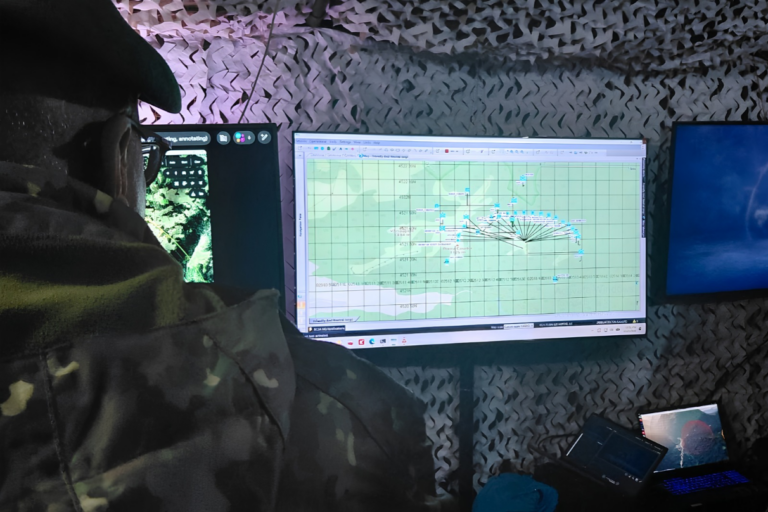
ISW is responsible for defining the technical aspects involved in the collection of pollution data at the USV level and their transmission to the command and coordination center. Within the command and coordination center, ISW delivers a USV monitoring and remote control application.
ISW’s activities focused on the objectives defined for Stage 1 of the project, starting with the current operational procedures governing marine pollution monitoring. The SMARTPOL team focuses on prevention, real-time data collection, and post-processing.
General Working Procedure
Detection is mainly achieved by analyzing satellite imagery together with AIS (Automatic Identification System) vessel data. Whenever a potential pollution event is detected, the SMARTPOL drone validates the incident using onboard pollution sensors.
ISW investigated all architectural components related to data acquisition, communications, integration, and command & control capabilities required by the pilot system.
ISW Command & Control Architecture
The IoT module integrated into the USV/Drone platform provides sensor integration, data acquisition, and secure transmission to the command center. The solution is a reusable, standardized module that can be deployed during pilot activities in Turkey, Malta, and South Africa.
The project architecture follows open standards, allowing interoperability through APIs, software libraries and open data structures.
The main achievements during this stage were defining operational scenarios, technical requirements, and the overall SMARTPOL architecture.
The SMARTPOL project was presented during the MarTERA Autumn Conference (25–27 October 2020), attended by international coordinators, funding agencies, project partners and program beneficiaries.
SMARTPOL – Status 2022–2023
The proposed project involves developing a modern concept that uses artificial intelligence, real-time pollutant monitoring via IoT platforms, and subsequent data processing.
SMARTPOL Functional Components
ISW is responsible for defining the technical aspects of collecting pollution data at the USV level and transmitting it to the command and coordination center. Within the command and coordination center, ISW delivers a USV monitoring and remote control application.
Activities performed during 2022 focused on the objectives defined for Stage 1 of the project, starting from current operational procedures for marine pollution monitoring. The SMARTPOL team concentrated on prevention, real-time acquisition, and post-processing of pollution data.
General Working Procedure
Detection is mainly achieved by analyzing satellite imagery together with AIS (Automatic Identification System) vessel information. Potential pollution events are confirmed by the SMARTPOL drone equipped with dedicated sensors.
ISW investigated the architectural components responsible for data acquisition, communications, and integration into the SMARTPOL Command & Control system. ISW developed the C2 Software, Data Communication System, and Data Acquisition System.
SMARTPOL Architecture
The IoT module integrated into the USV platform provides sensor integration, data acquisition, and secure communications towards the command center. The module is designed as a reusable, standardized solution for pilot deployments in Turkey, Malta, and South Africa.
The architecture is based on open data structures, APIs and software libraries, allowing interoperability with existing and future monitoring systems.
Prototype Development
During 2022 and 2023, the project focused on developing functional prototypes, IoT modules, environmental sensors, acquisition boards, and data visualization capabilities.
Initial experiments used Arduino UNO R3 and Arduino Wireless boards. The first laboratory prototypes integrated temperature and turbidity sensors, while Firebase cloud services provided secure storage and visualization.
Communication Infrastructure
After stabilizing the system architecture, the team procured professional hardware for the acquisition subsystem. The communication subsystem evolved from Wi-Fi prototypes towards LoRa long-range communications.
Development Laboratory
The team integrated commercial LoRa equipment and laboratory prototypes into the SMARTPOL development environment. Connectivity tests confirmed reliable long-distance communication between the USV platform and the command center.
LoRa Gateway
Experimental tests demonstrated that LoRa technology is suitable for transmitting GPS coordinates, telemetry, and command messages. Transmitting video streams over LoRa proved impractical because of bandwidth limitations; therefore, LoRa remains the backup communication channel.
The SMARTPOL project was presented during the MarTERA Autumn Conference (2022) and at the consortium meeting held in Istanbul in September 2023, where all partners reviewed the achieved milestones and agreed on the next integration activities.
SMARTPOL – Status 2024
System Integration
ISW continued integrating the Command & Control software platform with the communication and data acquisition subsystems. Special attention was given to interoperability between autonomous surface vehicles (USV), environmental sensors and the command center, ensuring reliable collection, processing and visualization of operational information.
Field Validation
The consortium validated the technical solutions developed during the project by executing laboratory and operational demonstrations. The validation activities confirmed the proposed architecture’s functionality and demonstrated the feasibility of autonomous pollution monitoring using standardized hardware and software components.
Communication Infrastructure
The team further optimized the communication architecture, validating LoRa technology for telemetry, command transmission, and GPS positioning. In contrast, broadband communications remained the preferred solution for large data transfers such as imagery and video.
International Cooperation
Throughout 2024, the SMARTPOL consortium continued close cooperation among all international partners, coordinating final technical activities and preparing the project deliverables.
EUROSATORY 2024
ISW presented its technologies at EUROSATORY 2024, held in Paris between 17–21 June 2024, promoting the SMARTPOL project and its innovative Command & Control, IoT, and autonomous monitoring capabilities to an international audience from the defense and security sector.
Project Completion
The SMARTPOL project reached its final implementation stage in December 2024 and successfully achieved the planned research and development objectives. The resulting technologies contribute to modern maritime pollution monitoring by combining autonomous platforms, intelligent sensors, secure communications, and advanced Command & Control software developed by the consortium.